
RasMalé: The $20 Billion Question
RasMalé promises investment on an unprecedented scale. But beyond the headline numbers, the key question is how much economic value the Maldives will actually retain, and what it gives in return.
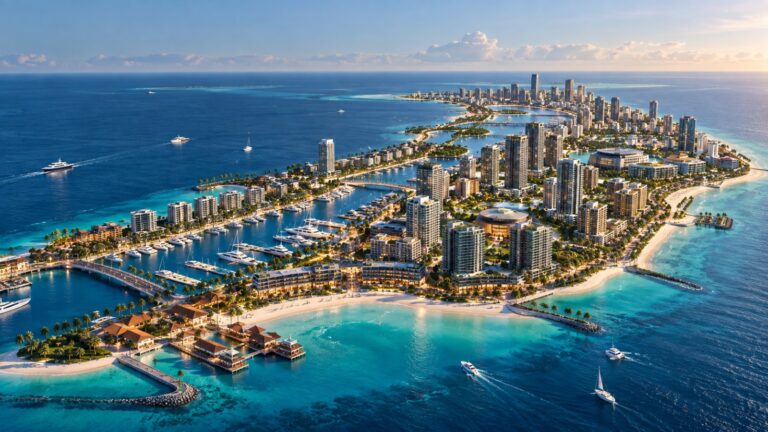
RasMalé promises investment on an unprecedented scale. But beyond the headline numbers, the key question is how much economic value the Maldives will actually retain, and what it gives in return.
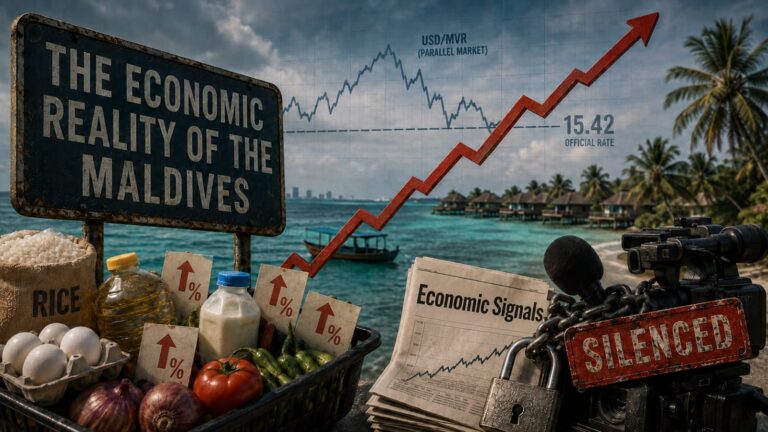
The Maldives faces rising living costs, persistent foreign-exchange pressures and deeper structural weaknesses in its economy. Restricting discussion of these pressures cannot make them disappear. Economic reform requires confronting the signals, understanding their causes and addressing the conditions that produce them.
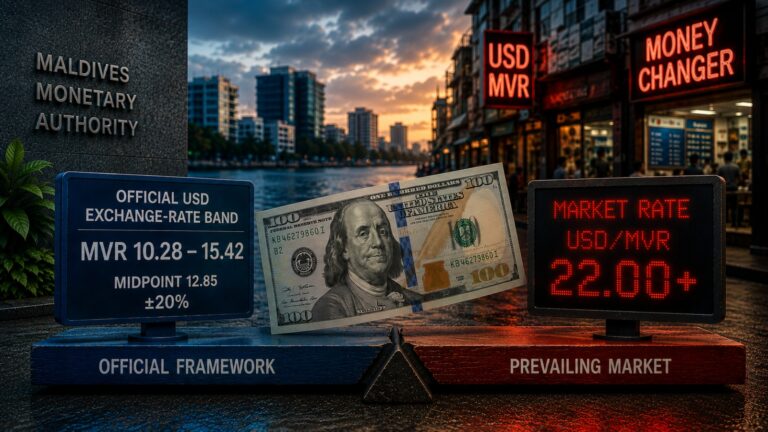
The US dollar trades in the Maldives at prices far above the official exchange-rate band, including through licensed money changers. The resulting question goes beyond the price of the dollar: what does the regulatory framework permit, and who is responsible for ensuring that its rules are followed?
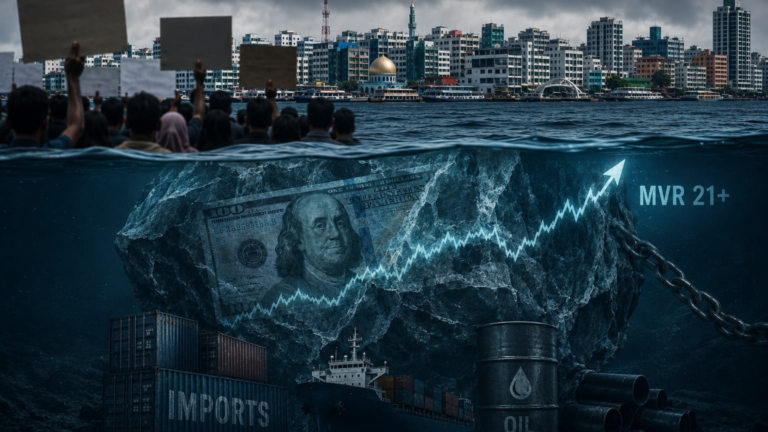
Dhathivejje puts inflation and the black-market dollar at the centre of public attention. Behind those pressures lie deeper questions about the exchange-rate peg, fiscal and external deficits, public spending, reserves and who ultimately bears the cost of economic adjustment.
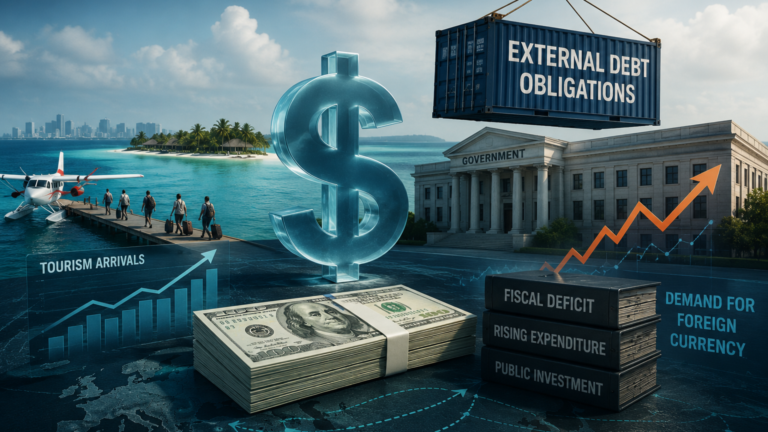
The shortage of US dollars in the Maldives is not simply a foreign exchange problem. Persistent fiscal deficits, rising expenditure and the external debt obligations created by years of borrowing are placing increasing pressure on scarce foreign currency, making expenditure reform central to a lasting solution.
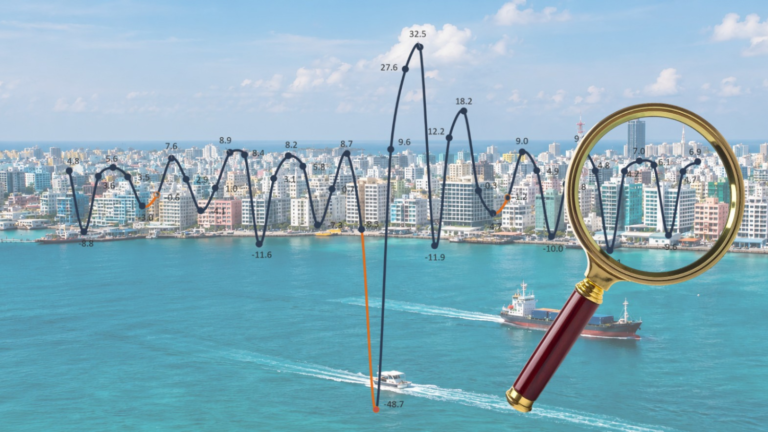
An economy can continue to grow while households and businesses experience considerable financial pressure. Looking beyond headline GDP, the Maldives presents a more complex picture of resilience alongside persistent fiscal, external and structural vulnerabilities.

The widening gap between official and parallel exchange rates has intensified debate over the future of the Rufiyaa. This article examines whether greater exchange-rate flexibility could work in the Maldives, and why reserves, fiscal discipline and foreign-exchange liquidity matter for any transition.
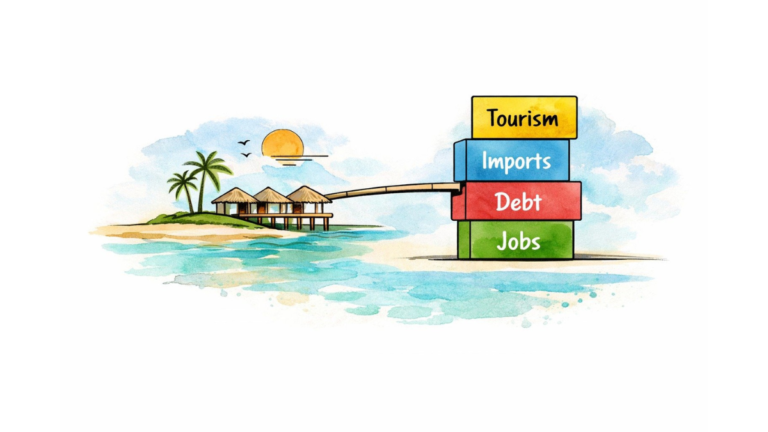
Tourism transformed the Maldives and remains its principal source of foreign exchange. But high import dependence, external debt, foreign labour and weak domestic linkages mean that strong tourism performance has not translated into a sufficiently diversified and resilient economy.
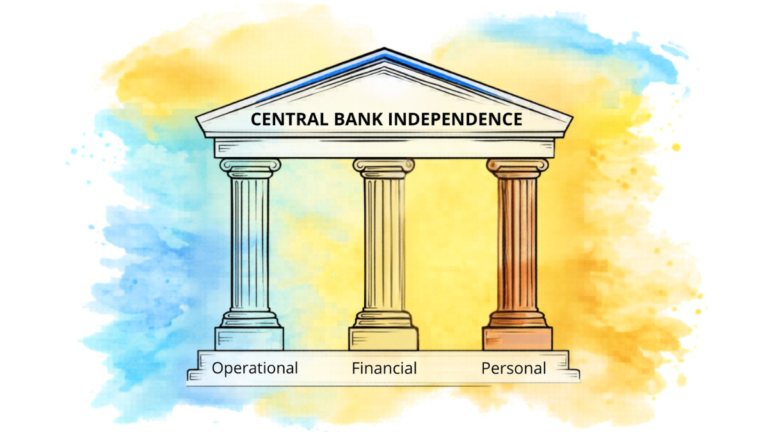
Central bank independence is more than an institutional principle. For the Maldives, where foreign exchange pressures and fiscal constraints remain significant, the credibility and autonomy of the Maldives Monetary Authority are closely linked to confidence in the Rufiyaa and wider economic stability.
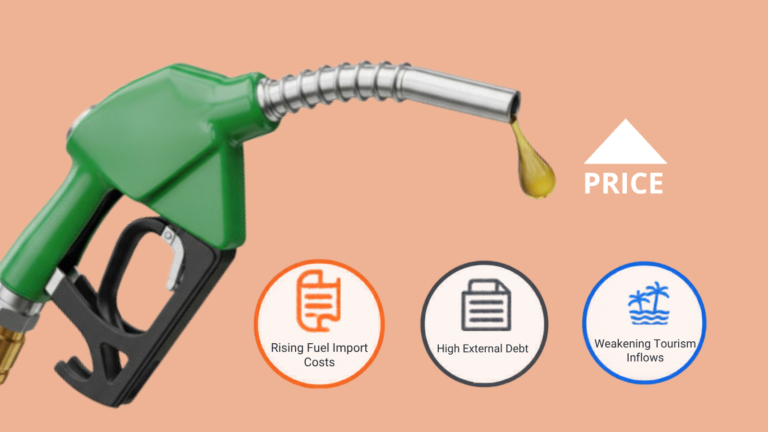
Global conflict is feeding directly into the Maldivian economy through higher fuel and transport costs, weaker tourism and rising food prices. The pressures expose the vulnerabilities of a small, import-dependent economy and the need to strengthen economic resilience.